Calibration masters, and the groups it will not mix
The Calibration Lab builds reusable master frames from your darks, flats and bias frames — sorting them into compatibility groups deterministically rather than by trust, loading them one at a time so a hundred frames costs the memory of one, and refusing to combine two frames that do not describe the same sensor state.
On this page
This page is about what the mode does with the frames once you have them. How to shoot each kind — a dark, a flat, a bias, a dark-flat — how many, and which a star-trail night needs at all is its own guide.
Watch it happen: the video guide for this mode (3:59) shows thirty-six darks from three nights sorted into three groups, two masters built and the five-frame group refused, on the real application with every count as it reported it.
Why a master frame, and why keep it
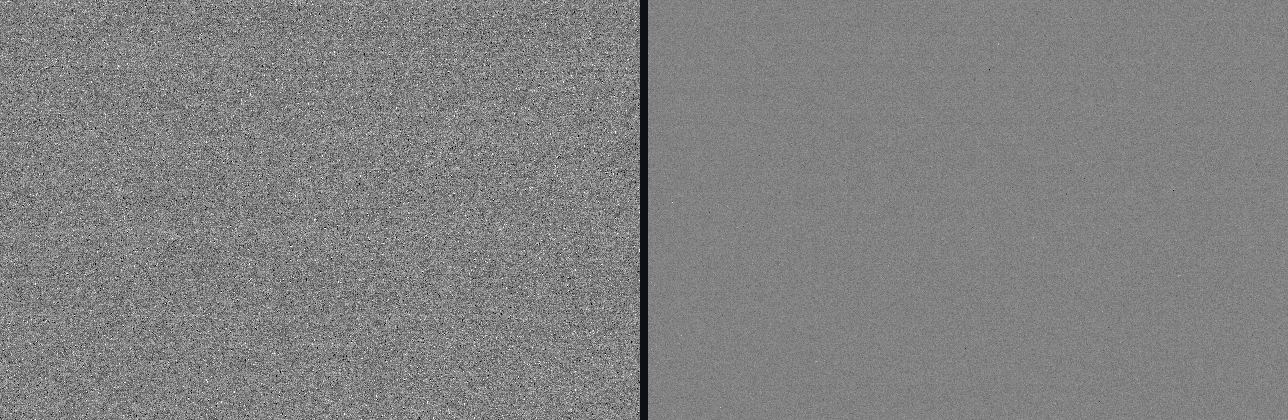
A dark frame records what your sensor produces with no light at all: hot pixels, amplifier glow, the thermal signal of that exposure at that temperature. A flat records what your optics do to an even field: vignetting, dust on the sensor, an uneven filter. Subtracting one and dividing by the other removes both from every Light — but a single dark carries its own noise, so subtracting one dark adds noise while removing a pattern.
Combining twenty of them into a master keeps the pattern and averages the noise away. And because the pattern belongs to the equipment rather than the night, a master is worth keeping and reusing until something about the equipment changes.
The groups it forms, and the ones it will not mix
Frames are sorted into compatibility groups deterministically — the same folder produces the same groups every time, which is what makes a master reproducible rather than a thing that came out of one particular afternoon. Two frames that do not describe the same sensor state do not go into one master, and the refusal names what differed rather than reporting a code.
This is the quiet failure the mode exists to prevent. A dark taken at a different exposure or a different ISO looks exactly like a usable dark, combines without complaint in most tools, and subtracts the wrong amount from every Light of the night — leaving a picture that is wrong by a constant nobody can see and nothing can recover.
A hundred frames for the memory of one
Sources are loaded sequentially and folded in as they arrive, so the memory a session needs is set by the size of one frame rather than by how many there are. That is the same property the main stacker has, and it is the reason a browser is a reasonable place to do this at all.
One Light, before you commit the night to it
A master can be applied to a single Light and looked at before anything else is done with it. That is the cheapest possible check on the most expensive possible mistake: a wrong master applied to two hundred frames costs the whole night, and applying it to one costs a moment.
What to look for is over-correction as much as under: a dark that removed too much leaves the background darker than the sky ever was, and a flat that divided by the wrong field leaves a bright or dark ring where the vignetting used to be.
Try it on your own night
Open the Calibration lab Nothing is uploaded and nothing is installed; the frames are read in your browser.