Why the Milky Way disappears from most skies
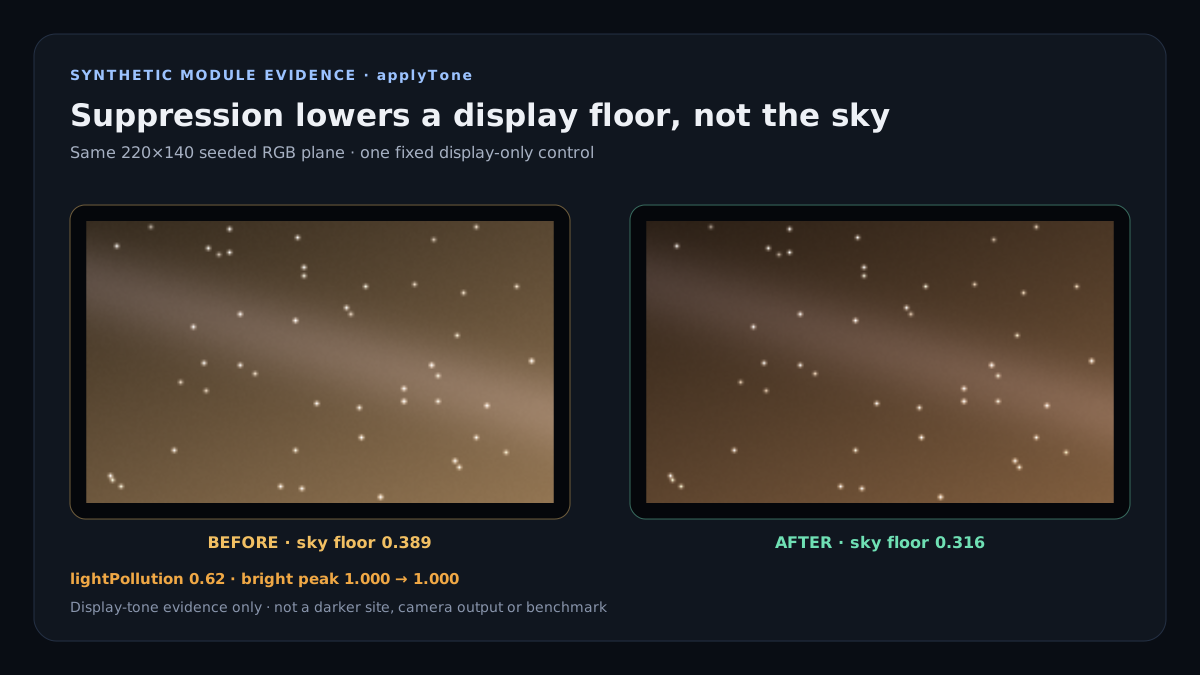
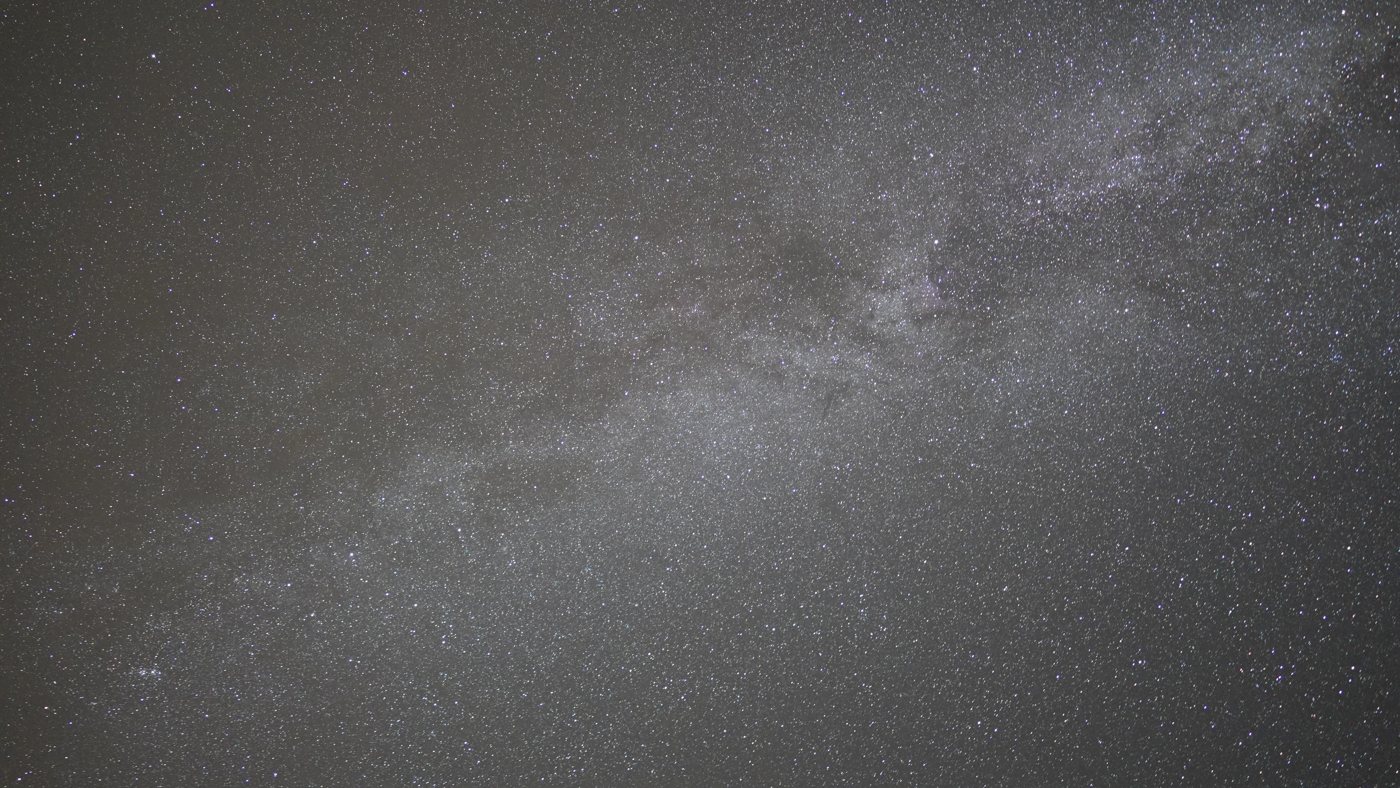
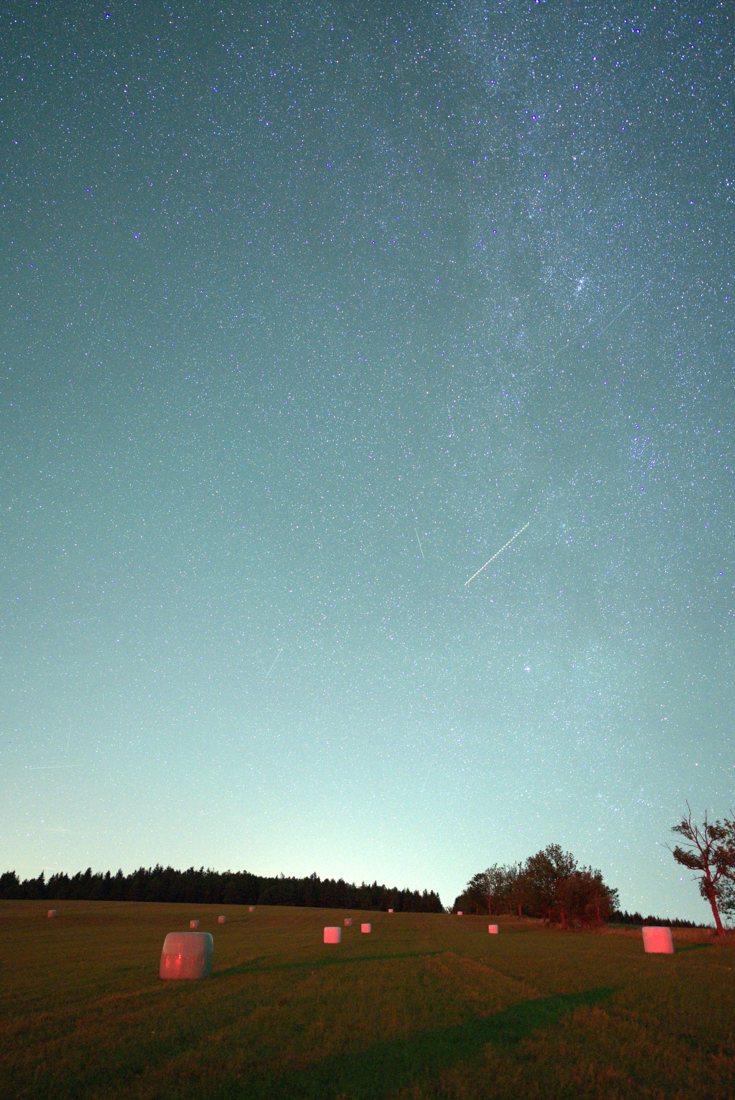
Light pollution lifts the whole background of the sky, so faint stars and the Milky Way drop below it and vanish even though the camera works perfectly; the Bortle scale measures it, driving to a darker site helps most, and stacking a series with per-frame sky equalisation recovers much of what the glow buried. The two photographs below — same photographer, same kind of camera, a few weeks apart — show the gap, and here is what to do about it.
On this page
See how dark your own sky is →
What light pollution actually does
A star is only visible if it is brighter than the sky right behind it. Artificial light — streetlights, a distant town, a single farmyard lamp — scatters off the air and the moisture in it and lifts the whole background of the sky. The stars are exactly as bright as they were; the sky under them is now brighter, so the faint ones drop below it and vanish. The Milky Way, which is millions of faint stars blurred together, is the first thing to go: it is never bright, only vast, so a raised floor swallows it whole. That is why the Tenerife frame is full of galaxy and the rural one is nearly empty even though both cameras worked perfectly.
The Bortle scale, in one paragraph
The Bortle scale runs from 1 to 9 and puts a number on how dark a sky is. Bortle 1 is a genuinely black desert or high-mountain sky where the Milky Way casts a shadow; Bortle 2, like the Tenerife shot, is an excellent dark site with the galaxy blazing. The middle of the scale — Bortle 4 to 5, like the rural frame — is a small-town or exurban sky where the Milky Way is visible but weak and washed toward the horizon. Bortle 8 to 9 is inner-city, where only the Moon, the planets and a dozen stars survive. Each step is a real, measurable difference in sky brightness, not a matter of taste.
The best fix is to drive
Nothing beats a darker sky, and the difference is enormous: two Bortle steps can be the gap between an empty frame and a galaxy. An hour’s drive out of a city, or up above the haze that pools in valleys, moves you down the scale faster than any amount of processing. If you are serious about the Milky Way, a dark-sky map and a tank of fuel do more than any lens.
When you cannot: shoot a series and stack
Most of us cannot get to Tenerife on a Tuesday, and a light-polluted sky is not a dead loss. The glow is a bias — a raised, coloured floor added to every frame — and a stack can fight it two ways. Averaging many frames drops the random noise, so the faint stars that are barely above the glow stop being lost in grain; and equalising each frame’s sky before combining subtracts the floor itself, pulling the trails and the faint structure back up out of the orange. It will not give you a Bortle 2 sky from a Bortle 5 site — nothing will — but it recovers a great deal of what the glow buried, and it does it from the frames you already have.
And notice the trails across the rural frame: on a busy sky, satellites and aircraft cross constantly. A stack keeps every one of those bright lines unless something finds and removes them — which is worth as much on a light-polluted night as the sky equalisation is.
Stack a light-polluted night →