Full frame vs crop for astrophotography, honestly
A full-frame sensor collects more light and a wider field, so it starts ahead for night photography, but the gap is smaller than commonly claimed, stacking many frames cuts noise far more than sensor size does, and a crop body shooting a long series and stacking it beats a full-frame single exposure. Here is what the difference actually is, and where it stops mattering.
On this page
What “crop” actually means
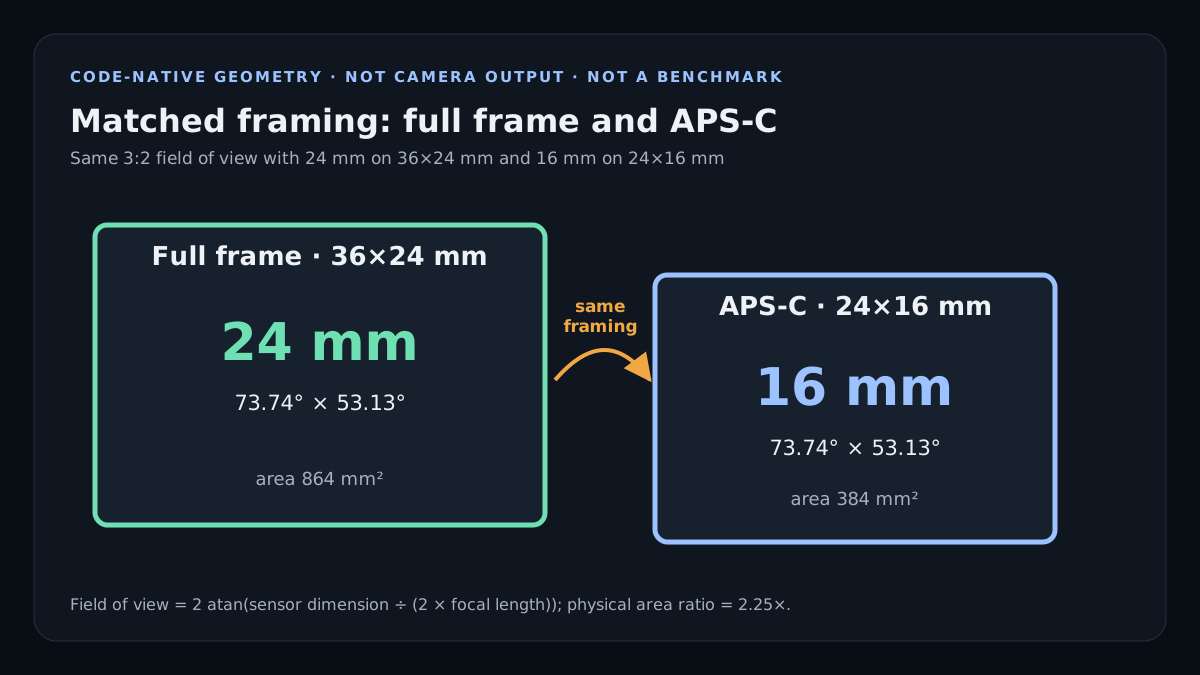
A crop sensor is physically smaller than a 36×24 mm full-frame one — typically 1.5× smaller on the side (APS-C), or 2× on Micro Four Thirds. Because it sees a smaller circle of the image the lens projects, it captures a narrower field of view: a 24 mm lens frames like a 36 mm lens would on full frame. Nothing about the lens changes; the sensor just crops into the middle of what it projects.
Why full frame starts ahead: it catches more light
The real astro advantage is area. A full-frame sensor is a bigger bucket, so for the same scene it collects more photons in total, and typically has larger pixels that each collect more before noise sets in. More signal against the same read noise means a cleaner high-ISO frame — the faint end of the Milky Way, or a dim star trail, sits further above the grain. It also shows a wider sky, which for a sweeping arc or an arch of the galaxy is often the whole point.
Why the gap is smaller than the forums claim
Two frames from the same generation, shot to the same field of view and the same total exposure, are closer than a headline “one stop” suggests, because a crop sensor reaching the same framing uses a wider, faster part of its lens and gathers more light per pixel than the naive comparison assumes. Sensor technology has also flattened the field: a recent APS-C body out-performs a full-frame one from a few generations back. The camera that matters most is the one whose high-ISO noise floor is lowest, and that does not always track sensor size.
Why stacking narrows it to almost nothing
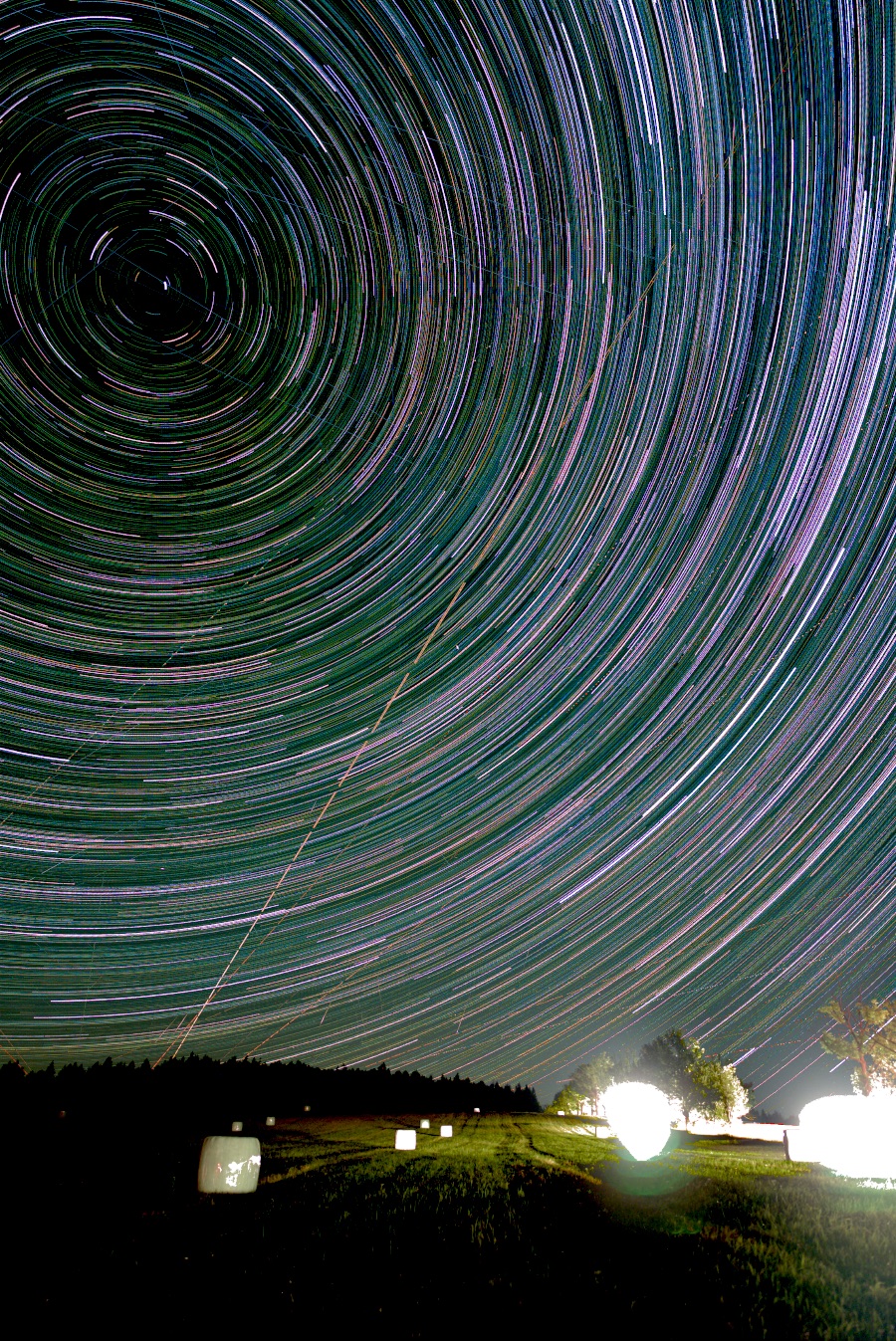
Here is the part the sensor-size debate leaves out. Averaging frames divides random noise by roughly the square root of the frame count — stack sixteen and the noise drops about four times, stack a hundred and it drops ten. That is a far larger clean-up than the gap between a crop and a full-frame single exposure. A crop body that shoots a long series and stacks it lands ahead of a full-frame body that took one frame and trusted it. For star trails, nightscapes and deep sky — anything you shoot as a sequence — your result is set more by how many frames you took and how well they combined than by the sensor behind them.
So what should you buy, and do?
If you are buying for astro and the budget is there, full frame gives you width and a little headroom, and it is the safe answer. If you already own a crop body, it is not holding you back — put the money into a fast wide lens and a sturdy tripod, shoot long series, and stack them. Either way the technique is the same: many exposures within your sensor’s trailing limit, a short interval between them, and a combine that equalises the sky, fills the gaps and takes out the satellites. The sensor sets your starting line; the sequence and the stack decide where you finish.