Why the stars in your corners look like seagulls
Coma and astigmatism smear corner stars into seagulls and crosses on a fast wide lens wide open; stacking cannot fix an optical aberration because it is identical in every frame, so the cure is at capture: stop the lens down a stop or two, or use a lens designed to hold its corners. Here is what is happening and what to do about it.
On this page
Coma, astigmatism, and why only the corners
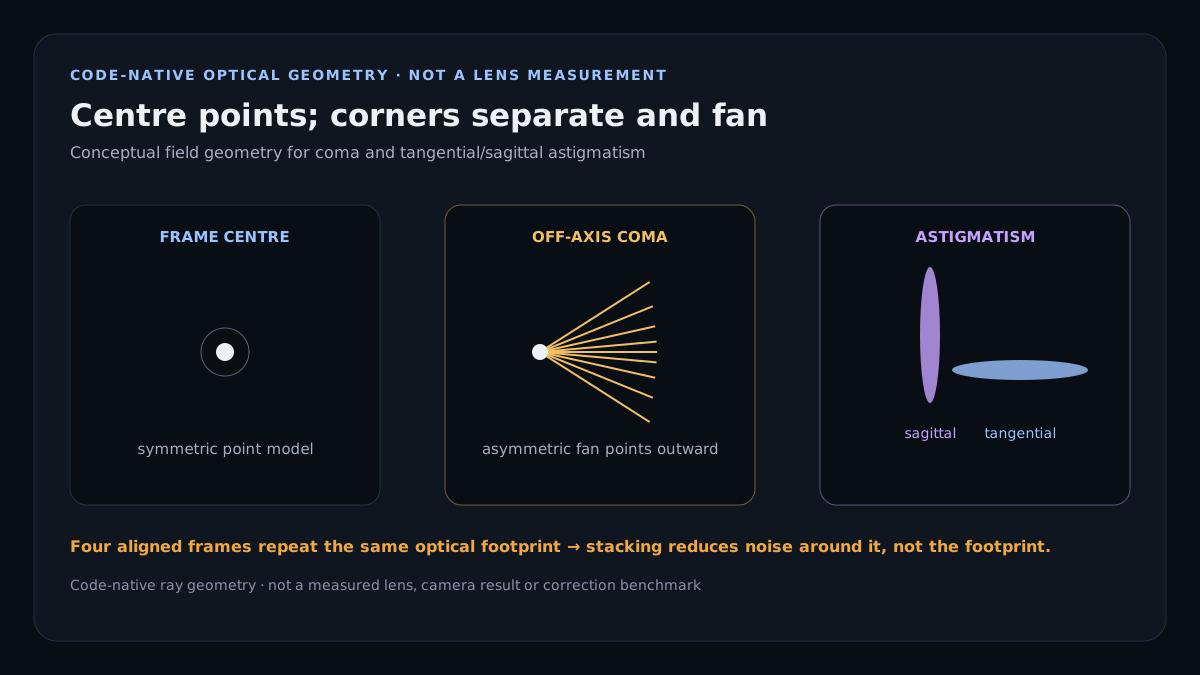
A perfect lens would focus a star to a point everywhere on the frame. A real one focuses the centre well and struggles at the edges, where light enters at an angle. Coma smears an off-axis star into a little comet or seagull that points away from the centre — brighter at the head, fanning out at the tail. Astigmatism is the lens focusing the vertical and horizontal parts of a star at slightly different distances, so the star becomes a short line or a cross that changes orientation across the field. Both are worst wide open and worst in the extreme corners, and both are why a lens that looks tack sharp on a landscape can look messy on a star field.
Why stacking cannot repair it
It is tempting to think a stacker will average the seagulls away. It will not. An aberration is not noise — it is the same deterministic smear in every single frame, in the same place, pointing the same way. Averaging identical shapes gives you the same shape, cleaner. Stacking beats down random noise and it removes things that move between frames, like satellites; it cannot un-bend light the lens already bent. The corner has to be fixed before the shutter, not after.
The fix that always works: stop down a little
Coma and astigmatism fall off fast as you close the aperture, because you stop using the troublesome outer edge of the glass. Going from f/1.4 to f/2, or f/1.8 to f/2.8, usually turns the corner seagulls back into stars while costing you less than a stop of light — which you get back, and more, by stacking a few extra frames. For a wide starfield this trade is almost always worth it. If the corners are still soft one stop down, the lens is telling you its honest limit.
How lens design fixes it, and what to look for
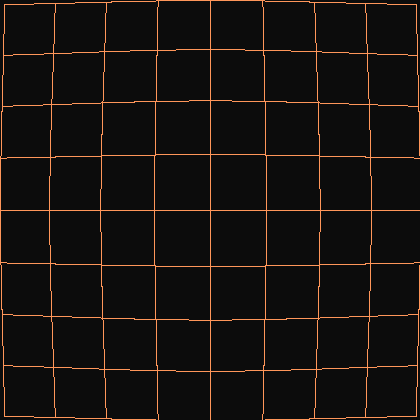
Modern fast wide lenses correct coma with aspherical elements and exotic low-dispersion glass that bring the off-axis rays back to a point. A lens marketed for astro, or reviewed with a corner-star crop, will hold its corners a stop or more wider than a general-purpose lens of the same speed. When you read a lens review for night work, ignore the centre — every lens is sharp in the centre — and look only at the extreme-corner star crops wide open. That single frame tells you more than the whole rest of the review. See also what your lens does to the geometry of the field, which the tool measures and can correct where the aberration is distortion rather than coma.
And the rest, in Lightroom
After you have stopped down as far as the shot allows, a little residual coma can be tidied but not removed: a small amount of the Lens Corrections panel’s defringe and a gentle manual sharpen masked away from the corners keeps the eye off the worst of it. Do not chase it with heavy sharpening — that just makes crisp seagulls. The honest answer is that coma is an optical problem with an optical fix, and the software’s job is only to keep the corners from drawing attention, not to pretend the lens did better than it did.
Stack your clean-cornered night →